When I landed in Canada thirteen years ago, I spent my first night in a hotel that cost $140 I couldn’t afford. I didn’t know what my other options were, and I paid for that. Most newcomers don’t know either, and you end up paying more than you should for a bed.
This guide covers temporary housing in Canada for newcomers: the options for your first two weeks, how to choose between them, how to avoid rental scams while you’re exhausted and jet-lagged, and where to find free help. I’m not quoting nightly prices on purpose. They change by city and by season, so a number that was right last spring can be wrong this winter. Instead, I’ll show you what to compare.
This is general information, not legal or immigration advice.
In This Post
- Why Temporary Housing Is the Smart First Step
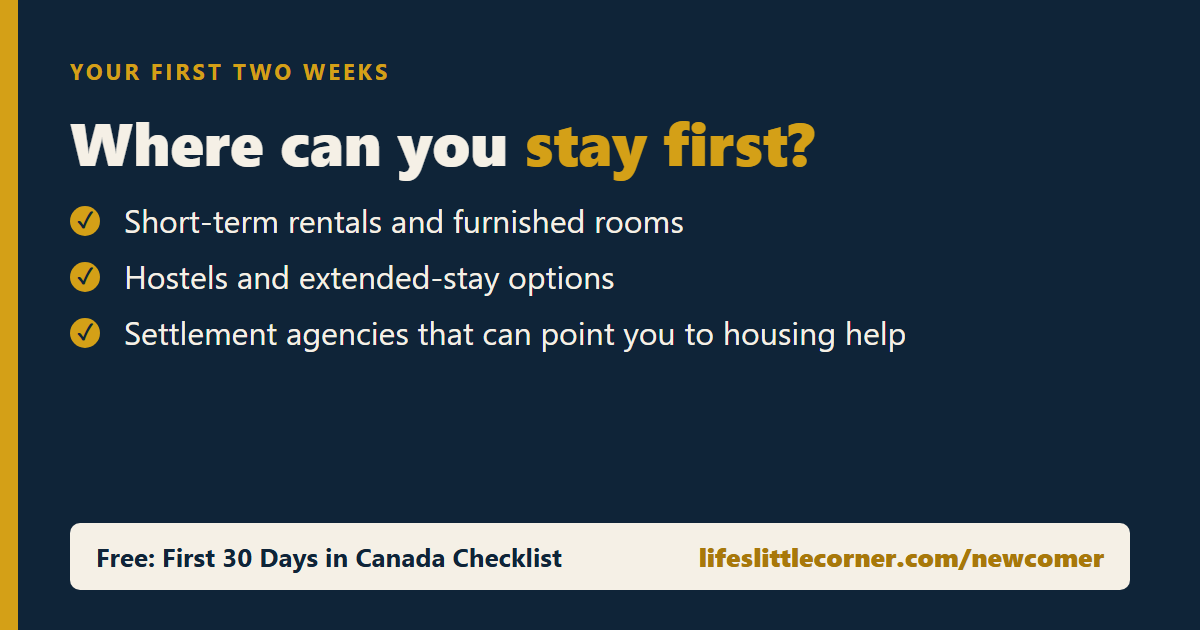
- Your Short-Term Options
- How to Compare Them
- Free Help From Settlement Agencies
- How to Plan Your Two-Week Budget
- Scams and Red Flags to Avoid
- Common Mistakes
- Sources
Why Temporary Housing Is the Smart First Step
You’re tired, you don’t know which neighbourhoods suit you, and you may not be ready to sign a year-long lease on an apartment you’ve never seen. A short-term place buys you time to make real decisions instead of panicking into the first available rental.
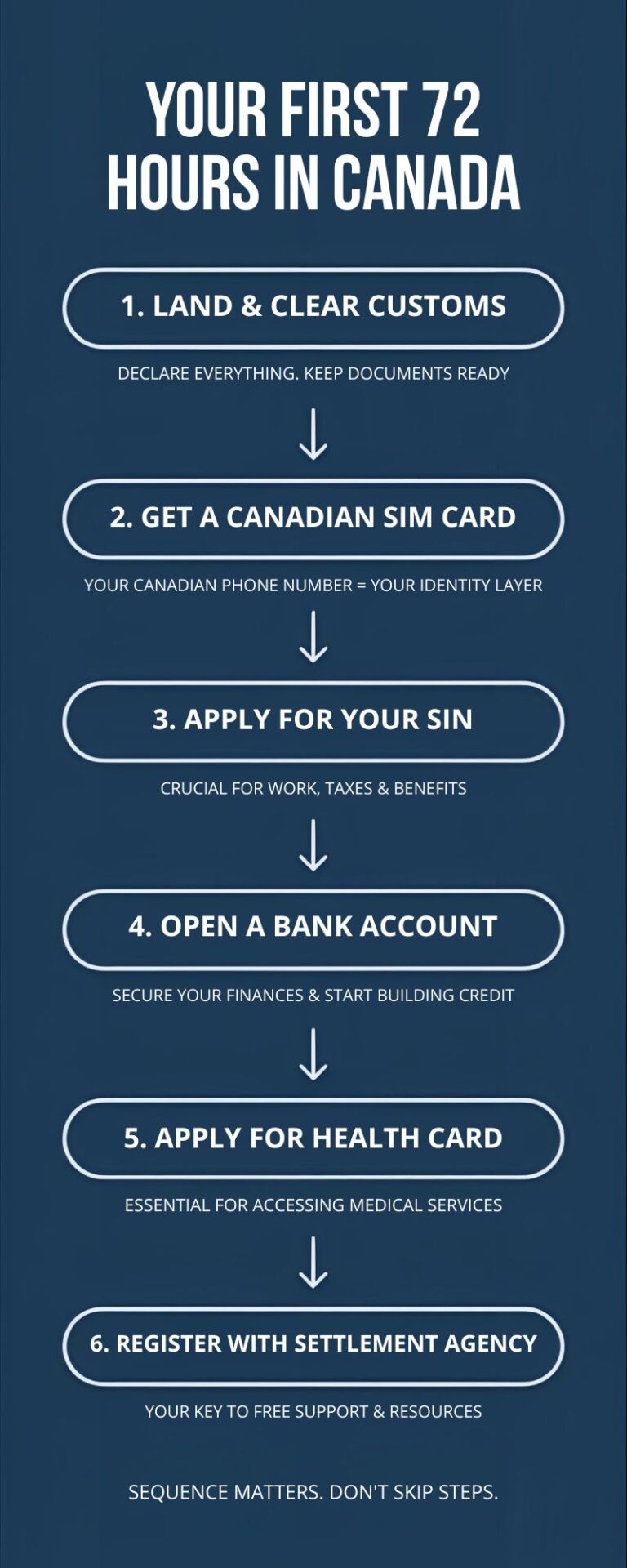
Your first two weeks have a long to-do list: getting your SIN, opening a bank account, getting a phone plan, and applying for your health card. If you haven’t seen the full order, read your first 72 hours in Canada. Many of those tasks involve giving an address, so a stable temporary address makes things easier. Your bank may ask for proof of address, and the bank account walkthrough explains what to bring.
Your Short-Term Options
Furnished short-term rentals
Platforms such as Airbnb list furnished apartments and rooms, usually with a kitchen. The main advantage is that you can see photos, read reviews and message the host before you arrive. The main downside is cost, and that the price shown may not include cleaning or service fees, so check the total before you book. Read each platform’s own protection policy before you pay. Do not assume you are covered. Policies differ and have conditions.
Hostels
Hostels usually offer a bed in a shared dorm or a private room, and many have shared kitchens. They are often cheaper than a full apartment, and you will meet other travellers and newcomers. The trade-offs are less privacy and shared space. Not every city has a hostel, so check what exists where you are landing, and read recent reviews for cleanliness, noise and security.
Hotels and extended-stay options
A hotel is the easiest option when you arrive late and tired, and it’s fine for the first night or two. Hotels are often the most expensive way to stay for a longer period, so many newcomers use one for a night or two, then move to something cheaper. Some hotels offer weekly rates or rooms with a kitchenette. Ask before you book.
Staying with someone you know
If a friend or relative offers a spare room, a couch for a few days can be the best start. Agree early on how long you’ll stay and what you’ll contribute, so it stays a good relationship.
Employer help
Some employers help relocated workers with housing, such as a short-term allowance or a list of options. This isn’t universal, but it costs nothing to ask HR before you land, especially if you are arriving for a specific job.
Emergency housing
Emergency housing is a different category. Settlement.org describes it as short-term accommodation for people who are homeless or in crisis, and notes that each facility sets its own rules about who is eligible to stay, for how long, and what services it offers. It isn’t a planned option for a typical arrival, but if you find yourself without a place to stay, ask a settlement agency what exists in your area.
How to Compare Them
| Question | Why it matters |
|---|---|
| What is the total price for all your nights, with fees? | The nightly rate often isn’t the final cost. |
| Is there a kitchen? | Cooking for yourself can lower your food costs. |
| How far is it from transit, a bank and a Service Canada office? | You will make many trips in your first two weeks. |
| Can you cancel or extend? | Your plans will change after you arrive. |
| Will they give you something with your name and the address? | It can help when you need proof of address. |
| What do recent reviews say about safety and cleanliness? | Recent reviews are more useful than old ones. |
Get the free First 30 Days in Canada Checklist
Housing, SIN, banking, health card: all the steps in the right order.
Free Help From Settlement Agencies
IRCC says you can get its free settlement services if you’re eligible, and it runs a tool where you enter your postal code, city, province or territory to find service provider organizations near you. These organizations also help with things like finding a job. Eligibility depends on your immigration status, so check the tool’s own information before you assume you qualify.
Housing support varies by organization, so the best approach is to contact one and ask directly: what housing information do you offer, can you point me to local options, and can you help me understand a lease? You don’t have to figure this out alone, and a settlement worker will know your city far better than a website does.
How to Plan Your Two-Week Budget
I won’t give you a fixed number, because your city and your choices change it so much. Build your own budget with these lines, and fill in real prices for the place you’re landing:
- Housing: total for all nights, including fees and taxes.
- Food: if you have a kitchen, groceries cost less than eating out every meal.
- Getting around: transit passes or rides to your appointments.
- Phone and documents: a phone plan, and any fees for IDs or documents. See phone plans with no credit history.
- Buffer: keep extra money aside for the unexpected, such as a longer stay than planned.
Then add it up and compare it to the money you have access to. If it doesn’t fit, you have two levers: choose a cheaper type of stay, or stay for fewer nights while you search. And remember that your housing cost will not stop after two weeks, so keep money for a deposit and your first month’s rent.
Scams and Red Flags to Avoid
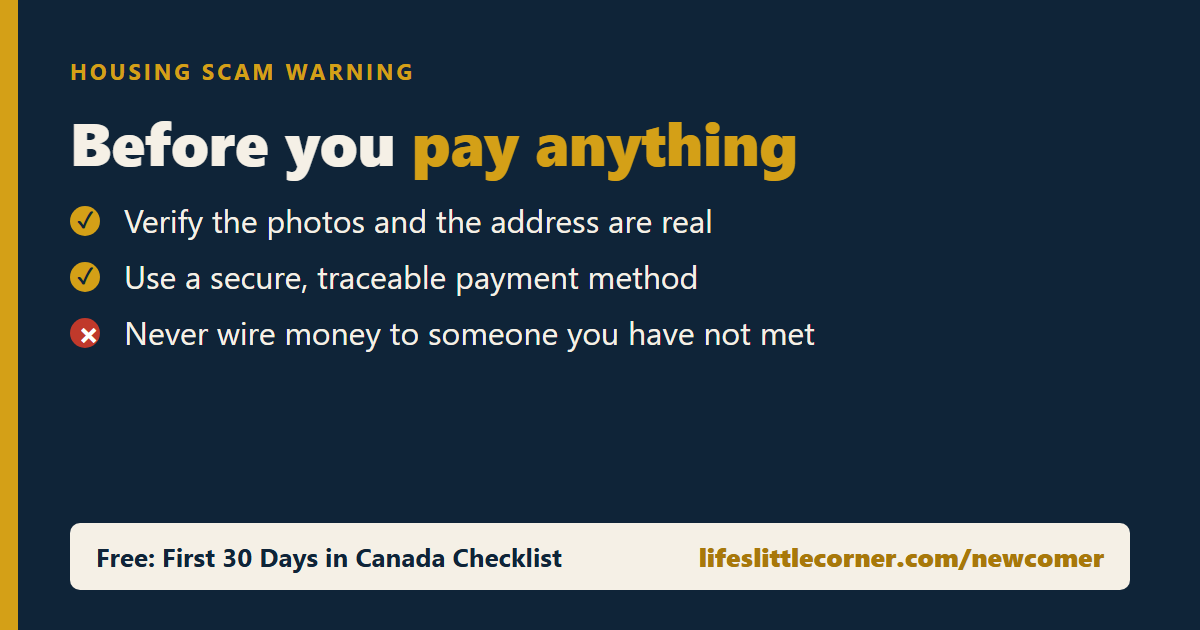
You’re tired, in a new place and short on time, and scammers know it. The Canadian Anti-Fraud Centre warns about fake ads for rental properties in ideal locations at low prices. After sending stolen photos, the fraudster asks for a quick payment to “secure” the property. Its advice is never to transfer money without verifying that the rental is legitimate.
- A price far below the market. The Centre lists rentals priced below fair market value as a warning sign. If you don’t know the usual price, look at several similar listings first.
- Pressure to pay quickly. A real host can wait while you check the details.
- Payment you can’t get back. The Centre suggests paying with a method that has fraud protection, such as a credit card. Be very careful with wire transfers, gift cards or cash sent to someone you haven’t met.
- Photos that may be stolen. Do a reverse image search, ask for a live video tour, and confirm the address is real.
- No way to verify who they are. The Centre advises locating and verifying the seller’s contact information (address, phone number, email) before you pay, and searching online to see whether anyone has reported them.
- Unusual sublet arrangements. Subletting rules differ by province. Check your province’s tenant information before agreeing to anything, and get every agreement in writing.
If you think you’ve been targeted or have lost money, report it to your local police and to the Canadian Anti-Fraud Centre. The Centre says to report even if you were targeted but did not fall victim.
Common Mistakes
- Booking one night, then scrambling. Book enough nights to get through your first appointments, with the option to extend.
- Judging only by the nightly price. Add fees, transit and food.
- Paying before verifying. Always check the listing and the host first.
- Signing a long lease too early. Use your first two weeks to learn the city. For what to expect when you rent later, a settlement agency can explain your rights as a tenant.
- Not asking for help. Settlement agencies exist for exactly this, and many services are free if you’re eligible.
Your first two weeks don’t define your life in Canada. Pick the option that lets you sleep, shower and think clearly, then use the time to handle the real tasks: your SIN (see how to apply for a SIN), your bank account, your phone plan and your health card.
Your First 30 Days, Organized
Don’t figure this out alone. Get the checklist for housing, SIN, banking and healthcare in the right order.
Sources
All pages were checked on October 27, 2026. Rules and services change, so confirm with the organization before you act.
- IRCC: Find free newcomer services near you
- Canadian Anti-Fraud Centre: Protecting yourself online (rental scam alert and buying online)
- Canadian Anti-Fraud Centre: Protect yourself from fraud
- Settlement.org: Housing (Ontario)
Note: This guide is general information current as of October 2026. Prices, availability and services vary by city and province. Verify details before you book or pay.