Best AI Drafting Uses: 6 Ways to Beat the Blank Page
The best AI drafting uses turn a blank page into a rough page in minutes, not hours. That single shift is the biggest time-saver in my whole writing process. I wrote a full trilogy with AI helping at the draft stage, and the pattern held true on nearly every chapter.
A rough draft is not a finished draft. It is something to react to. Once words exist on the page, even messy ones, your brain switches from “what do I even say” to “is this right.” That second question is much easier to answer.
This post walks through the best AI drafting uses I actually rely on, where each one helps, and exactly where I stop using AI and start rewriting in my own voice. Let’s get into it!
Best AI Drafting Uses Start With Turning Notes Into Rough Prose
The single best AI drafting use is turning a list of bullet points into a rough paragraph. You already know what you want to say. AI just gets it onto the page faster than you can type it out in full sentences.
Here is how I actually do it. I write my notes exactly as they come to me — fragments, half-thoughts, out of order. Then I ask AI to turn those notes into a plain paragraph, in a specific tone, with no new facts added. That last part matters. I am not asking it to invent content. I am asking it to connect dots I already placed.
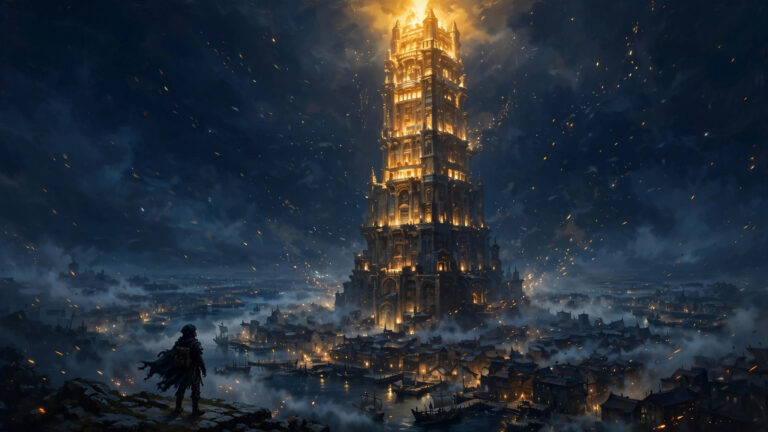
This works for both fiction and nonfiction. In a nonfiction chapter, my notes might be five loose points about a topic. AI drafts a paragraph that links them. In a novel scene, my notes might be “Kael sees the tower, feels dread, decides to go anyway.” AI turns that into three rough sentences I can then rewrite in his actual voice.
The output is never the final line. It is a scaffold. I read it, cut anything generic, and rewrite the parts that do not sound like me. But starting from a rough paragraph is faster than starting from nothing, every single time I have tested it against writing cold.
One habit makes this far more useful: keep your notes specific. Vague notes produce vague drafts. “Character is sad” gives AI almost nothing to work with. “Character stares at a photo, does not cry, sets it face-down” gives it real material, and gives you a much better rough paragraph to revise.
Nonfiction authors get an extra benefit here: AI drafting from notes is a fast way to spot gaps. If a paragraph comes back thin or repetitive, that usually means your original notes were thin too, not that the tool failed. Treat a weak rough draft as a signal to go research or think harder, not as something to force into shape with more prompting.
This is also where a story bible or chapter outline earns its keep — the more consistent detail you feed in, the less the rough draft drifts from what you already decided. If you have not built one yet, my post on best AI outlining uses covers exactly how I structure that step before I ever reach drafting.
Use AI Drafting to Generate Multiple Options, Not One Final Answer
Ask for three rough versions of a paragraph, not one polished one. This is one of the best AI drafting uses precisely because it keeps you in the decision-making seat instead of the acceptance seat.
When AI hands you a single “finished-sounding” paragraph, there is a real pull to just accept it and move on. That is how generic, sound-like-anyone prose ends up in a manuscript. When AI hands you three rough, clearly-unfinished options instead, your brain naturally starts comparing, picking, and combining — which is real writing work, not typing work.
I use this constantly for opening lines and transition paragraphs, the two spots where I get stuck most. I will ask for five very different opening lines for a chapter, none of them meant to be used as-is. Reading five rough attempts almost always sparks a sixth idea that is actually mine, built from what the options got wrong.
The same trick works for nonfiction transitions. Moving from one idea to the next cleanly is a small, fiddly skill. Getting three rough attempts at the transition sentence, then picking pieces from each, is faster than staring at a cursor.
Options also protect your author voice better than a single output ever could. A single AI paragraph tempts you to keep it whole. Three options force you to actively choose, which is the exact muscle that keeps your writing sounding like you and not like a generic AI mashup pulled from patterns in its training data.
Best AI Drafting Uses for Expanding an Outline Into Scenes
Take one line from your outline and ask AI to expand it into a rough scene. This is one of the best AI drafting uses for anyone who outlines before they draft, because it turns a plan into something you can actually test on the page.
An outline beat like “the two characters argue about the plan and split up” is a decision, not a scene. It tells you what happens, not how it feels, sounds, or moves. Asking AI to expand that beat into 200 rough words gives you a testable version — dialogue rhythm, pacing, where the tension lands — that you can react to immediately.
Most of what comes back will not survive. That is fine. The value is not in the sentences. It is in seeing the shape of the scene early, before you have sunk an hour into it yourself. If the expanded version feels flat, you know the beat itself needs work, not just the prose.
I use this heavily for scenes I am dreading. Dread usually means the scene is either emotionally hard to write or structurally unclear to me. A rough AI expansion breaks both kinds of resistance, because it gives me something concrete to push against instead of an empty outline bullet.
For nonfiction, the same move works on a chapter’s sub-points. Turn “explain why this matters to a beginner” into a rough paragraph, then rewrite it using your own examples and your own authority on the topic. The rough version just shows you the shape the explanation could take.
This step pairs directly with best AI brainstorming uses from earlier in the process — brainstorming generates the beat, drafting tests whether the beat actually works as a scene once it has real words attached to it.
Get the Free AI Writer’s Cheat Sheet
The exact prompts and workflow I use to draft, revise, and finish books with AI as a tool, not a replacement.
How AI Drafting Helps You Overcome Blank-Page Resistance
Wikipedia describes writer’s block as a non-medical condition where a writer struggles to produce new work or hits a creative slowdown, and it is one of the oldest, most common problems in writing. AI drafting will not cure that on its own, but it removes one specific trigger: the terror of the truly empty page.
A blank page asks you to make every decision at once — voice, structure, opening line, tone — with nothing to react to. A rough AI draft, even a bad one, turns that into a much smaller job: fix this sentence, cut that one, keep going. Editing is a fundamentally easier mental task than generating from nothing.
I keep a simple rule for this: if I have stared at a blank section for more than ten minutes, I generate a deliberately rough AI draft of it, just to have something on the page. I do not aim for quality at that point. I aim for words existing at all.
This matters for momentum across a whole project, not just one page. Writing sessions that end with visible progress make the next session easier to start. Writing sessions that end with a blank page make tomorrow’s blank page feel even heavier. Rough AI drafts, used this way, protect your daily momentum more than they protect any individual sentence.
One caution worth naming plainly: this only works if you actually revise afterward. Using AI drafting purely to escape the blank page, then leaving the rough output mostly untouched, produces flat, generic pages that read like nobody in particular wrote them. The momentum trick only pays off when it is followed by real human editing.
I have tested this against just powering through without any AI help, on similar chapter lengths across both nonfiction and fiction projects. The rough-draft-first approach consistently got me to a workable page faster, mostly because the revision instinct kicks in the moment any text exists, even text I know is going to change completely.
Where AI Drafting Uses Should Stop and Human Revision Begins
AI drafting should stop the moment a rough version exists. Everything after that — voice, judgment, final wording, factual accuracy — is your job, not the tool’s. This is not a small caveat. It is the actual center of using AI responsibly as a writer.
Wikipedia’s entry on generative artificial intelligence notes that these systems learn patterns from training data and generate new outputs based on those patterns, in response to a prompt. That is a useful thing for a rough draft. It is not a substitute for the specific, lived judgment that makes a page sound like a particular person wrote it.
The Authors Guild’s AI Best Practices for Authors puts this plainly: if you are claiming authorship, the words and thoughts need to be genuinely your own, not AI output copied over with light edits. Their guidance is worth reading in full if you publish under your own name, because it also covers disclosure and contract warranties that many authors have not thought through yet.
In practice, I rewrite every AI-drafted sentence that survives into a manuscript, even the ones I liked on first read. Rewriting forces me to actually own the line, catch anything factually shaky, and make sure it sounds like me and not like a smooth, generic average of a million other books.
My earlier post on human judgment in AI writing goes deeper into exactly which decisions stay yours no matter how good the drafting tool gets. Read it alongside this one if you are building your own AI drafting workflow from scratch, especially if you are early in how to start writing a new book and still deciding how much of the process to hand to AI at all.
Used this way, the best AI drafting uses save real time without costing you the one thing readers actually come back for: a voice that is unmistakably yours.
Get the Free AI Writer’s Cheat Sheet
Grab the exact prompts and drafting workflow behind my Shattered Crown trilogy — free, right to your inbox.
Now go draft something rough, and fix it into something yours.